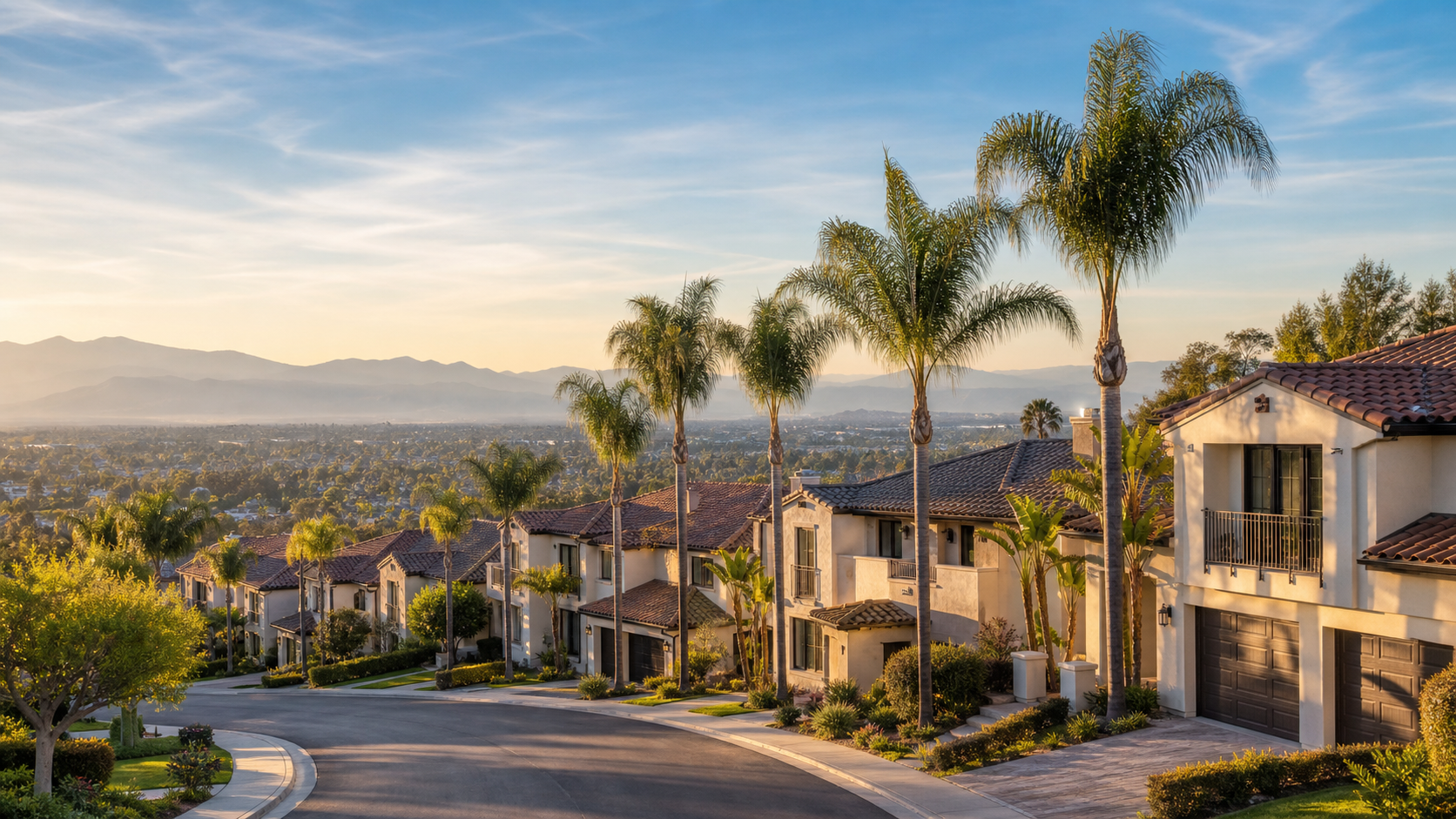
California housing market 2026
If you're trying to understand the California housing market in 2026, the first thing to know is that broad headlines are doing more harm than help. "California is up" or "California is down" may work as a news segment, but it doesn't help you make a selling decision in a real neighborhood, on a real timeline, with real buyers comparing your home to the one down the street.
That is the mistake sellers make first. They treat California like one market. It isn't. It is a patchwork of micro-markets moving at different speeds, with different buyer pools, different price sensitivity, and different levels of competition. If you start with a statewide headline, you can end up using the wrong playbook for your home.
California is too big for one market story
In 2026, the most useful way to look at California is not as a single market but as a collection of local negotiations happening under the same state flag. A seller in a move-up suburb is dealing with a different buyer mindset than a seller in a luxury pocket, a probate sale, or a condo market where monthly payments drive every decision.
That matters because sellers still tend to ask one oversized question: "How's the California market?" The better question is, "What are buyers in my segment doing right now?" Those are not the same thing. One gives you conversation. The other gives you strategy.
I've handled 200+ transactions, and one pattern keeps repeating: sellers get in trouble when they price off reputation instead of competition. California has famous markets, expensive markets, fast markets, slow markets, and neighborhoods that change block by block. Buyers do not pay for the statewide story. They pay for the alternatives they see this week.
The 2026 seller problem is not confusion. It's mixed signals.
What makes 2026 hard for sellers is not a lack of information. It's too much of it. One source says inventory is rising. Another says demand is resilient. One agent says wait. Another says list now. A lender talks affordability. A neighbor talks about the offer they got eighteen months ago as if nothing has changed.
That kind of noise creates hesitation, and hesitation usually shows up in pricing. Sellers either overshoot because they are anchored to an older number, or they under-explain the value of their home and assume buyers will "just get it." In a market with more comparison shopping, neither works very well.
The right approach is calmer than that. You do not need to predict all of California. You need to understand how buyers are behaving in your price range, in your area, and in your home's condition category. That is what determines leverage.
Price discovery gets more public in a market like this
When the market is easy, the first weekend can hide a lot of mistakes. When the market is more selective, mistakes stay visible. Price too high and the market starts talking back immediately. Not in theory. In saved searches, in showing feedback, in lower traffic, in the silence that sellers always feel before they admit the market is saying no.
That is why 2026 is likely to reward sellers who can separate aspiration from positioning. Your asking price is not a personal statement. It is a market test. If buyers believe it, the home moves. If they don't, the listing begins to age, and every price adjustment gets read as weakness instead of strategy.
Price it to sell from day one. You can't get the first two weeks back. That has always been true, but it matters more when buyers have time to compare and less fear of missing out.
Condition matters more when buyers feel less rushed
In a frantic market, buyers forgive more. In a selective market, they don't. That doesn't mean every seller needs a full renovation. It means deferred maintenance, clutter, weak presentation, and vague disclosures become more expensive because buyers have options and time to think.
That shift changes how you prepare a home in 2026. The goal is not to over-improve. The goal is to remove friction. Buyers should not have to mentally discount your home every few minutes as they walk through it. If they do, they will either write a lower offer or move on to the next listing that feels easier.
This is where a lot of sellers waste money. They spend on updates the market will not reward, while ignoring the things that actually shape buyer confidence: clean presentation, clear maintenance history, honest positioning, and a price that acknowledges the choices buyers already have.
The payment matters almost as much as the price
California sellers have always cared about sale price. In 2026, buyers are often doing more math around monthly payment than sellers expect. That means two homes with similar list prices may not compete the same way if one feels move-in ready and the other feels like a future expense.
That is one reason generic advice falls apart. A buyer stretching on payment does not evaluate your home the way a cash-heavy buyer does. A family selling one house to buy another sees risk differently than an investor or downsizer. The market is not just about value. It is about how much uncertainty a buyer can absorb after closing.
If you are selling, that should affect how you think about repairs, credits, staging, and pricing. Small sources of uncertainty can have an outsized effect when buyers are already doing tight monthly calculations.
Statewide headlines still matter, just not the way most people think
There is a role for big-picture California coverage in 2026. It helps explain mood. It tells you what sellers, buyers, lenders, and agents are all reacting to at the same time. But mood is not the same as market value.
Think of statewide coverage as weather and your local market as the road surface. The forecast may tell you there's pressure in the air. It does not tell you whether your block is dry, slick, crowded, or open. Sellers who confuse those two things either panic too early or hold out too long.
The more useful read is this: statewide conditions shape buyer psychology, but local competition shapes outcomes. That is where pricing, preparation, and timing become real.
What 2026 rewards is realism without pessimism
Sellers do not need cheerleading in this kind of market. They need clarity. The sellers who do best in 2026 will probably be the ones who accept the market they have, not the one they wish they had. That does not mean giving the house away. It means understanding that credibility is an asset. When your price, presentation, and expectations line up, buyers feel it.
There is still opportunity in a market like this. There always is. But the opportunity usually goes to the seller who reads the room early, adjusts before the market forces the issue, and treats strategy as something more than picking a number.
That is the California housing market story in 2026 as I see it: not one statewide answer, not one dramatic headline, and not one universal seller experience. Just a market that rewards the truth faster than the spin.
Paul Fernandez, REALTOR(R), advises Southern California home sellers on pricing, timing, and market data. CA DRE #01835505.